




Airborne Spectrum Monitoring, Direction Finding, and RF Analysis for Electronic Warfare Operations
Airborne spectrum monitoring enhances signal interception by operating above terrain and infrastructure that degrade RF propagation. It expands coverage, improves signal-to-noise ratio, and increases direction finding accuracy through direct line-of-sight. This enables forces to achieve a much broader and clearer spectrum situational awareness picture than with ground-based units, particularly in complex terrain and contested environments.
The LS OBSERVER Airborne Monitoring Unit (AMU) is an advanced drone-based spectrum monitoring solution for military operations. It enables airborne signal hunting to detect and geolocate hostile RF emissions, threats and interference, including jammers, drones, and satellite uplinks. It also supports RF coverage analysis of friendly networks to ensure reliable communications. With its airborne drive-test capability, the AMU provides forces with spectrum situational awareness around friendly camps and barracks, helping them identify vulnerabilities to hostile signal interception.
Unparalleled Airborne Spectrum Monitoring Capabilities
Enhance your spectrum surveillance with precision and flexibility.

Increase Coverage
- Detect more emissions than from ground level especially in urban areas or hilly terrain
- Capture a larger area for monitoring in comparison to ground-based stations

Get a Broader Spectrum Situational Awareness Picture
- Fly above obstacles that absorb or weaken radio signals
- Receive signals with a better signal to noise ratio (SNR)
- Improve quality for demodulation and decoding

Increase DF and Triangulation Accuracy
- Direct line of sight to emitter
- Fly above obstacles/metal structures which reduce DF accuracy
- Achieve a better direction finding and localization accuracy in urban areas or hilly terrain

Intercept Highly Directive Emissions
- Monitor tactical microwave links by flying inside the fresnelzone,
- Monitor and locate satellite uplinks by flying over the ground terminals (e.g. STARLINK, VSAT)
Configurable Payloads & Extended Flight Operations
Tailor the AMU to your mission requirements with specialized payloads and power options.

Multiple RF Payload Configurations
Attach specialized antennas and receivers based on mission needs - directional antennas for DF, omni antennas for spectrum monitoring, and high-frequency payloads for SHF/EHF applications.
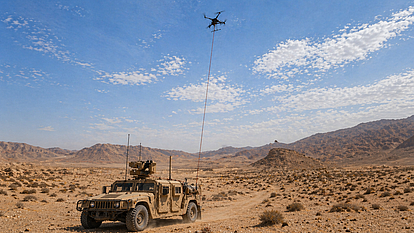
Battery-Powered or Tethered Operations
Choose battery mode for flexible, short operations or tethered mode for continuous data collection and stable power supply.
User-Friendly, Mission-Optimized Software
Pre-define measurements and start it by one click with the user friendly CMS software. Plan automate and execute precise flight plans with the ColMP software.
AMU Applications in Defense Environments
Providing airborne capabilities for interference hunting, RF threat detection, and communication assurance.
Military Spectrum Monitoring (ESM)
Deploy the AMU alongside fixed and mobile monitoring stations, integrating all data into a single centralized monitoring network.
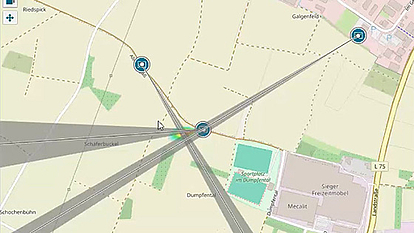
Automated Direction-Finding & Geolocation
Combine AMU direction-finding results with ground-based stations for precise triangulation and interference localization.

Airborne Drone and Pilot Detection
Detect and geolocate drone and RC signals with the AMU to expand coverage for low powered UAV emissions.

Airborne RF Drive Test
Record and map RF signals along flight routes to visualize coverage, identify vulnerabilities to hostile SIGINT, and support area surveillance and signal geolocation.

Intercept and Locate Highly Directive Emissions
Monitor and locate satellite ground terminals (e.g. STARLINK, VSAT). Fly directly inside the fresnelzone of microwave links and intercept the signal.